• PORTFOLIOS
  • Prints
  • Licensing
  • Books
  • About
  • CONTACT
  • Blog
  • Instagram
  • TECH INFO
  • LINKS
Menu

William Karl Valentine

  • PORTFOLIOS
  • Prints
  • Licensing
  • Books
  • About
  • CONTACT
  • Blog
  • Instagram
  • TECH INFO
  • LINKS

“Lisette Model – The Jazz Pictures” by Audrey Sands

March 18, 2026

I first met Audrey Sands at the Center for Creative Photography’s Legacy of LIGHT symposium in 2020. At the time she was the Norton Family Assistant Curator of Photography at the CCP as well at the Phoenix Art Museum.  I did not know much about her but as I watched her assist Becky Senf and interact with others she stood out.  It is a little hard to describe but she seemed organized and comfortable interacting with people.  I followed her on Instagram after the symposium because it was obvious she was going places.  A year ago, she became the Associate Curator of Photography at The Harvard Art Museums.

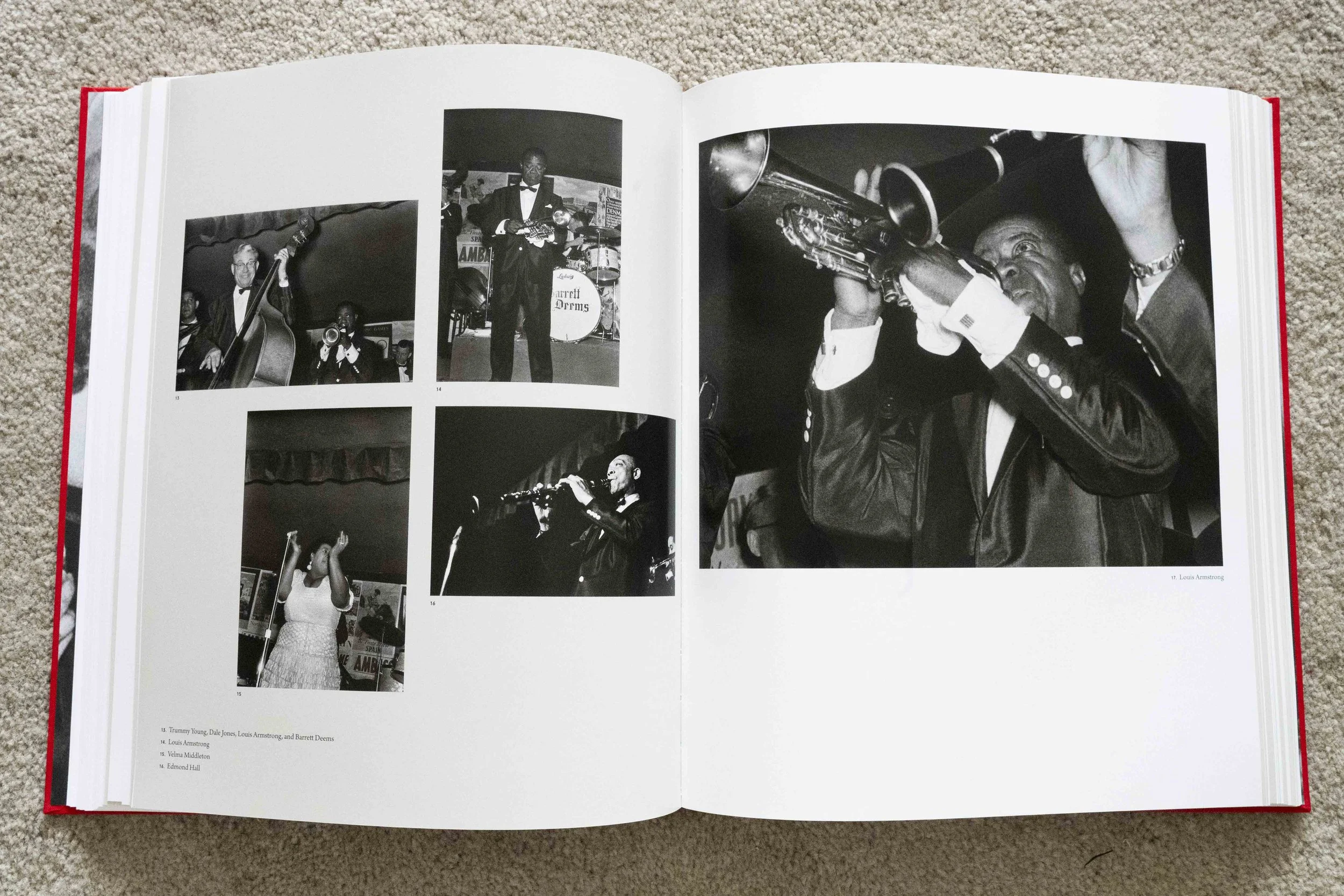
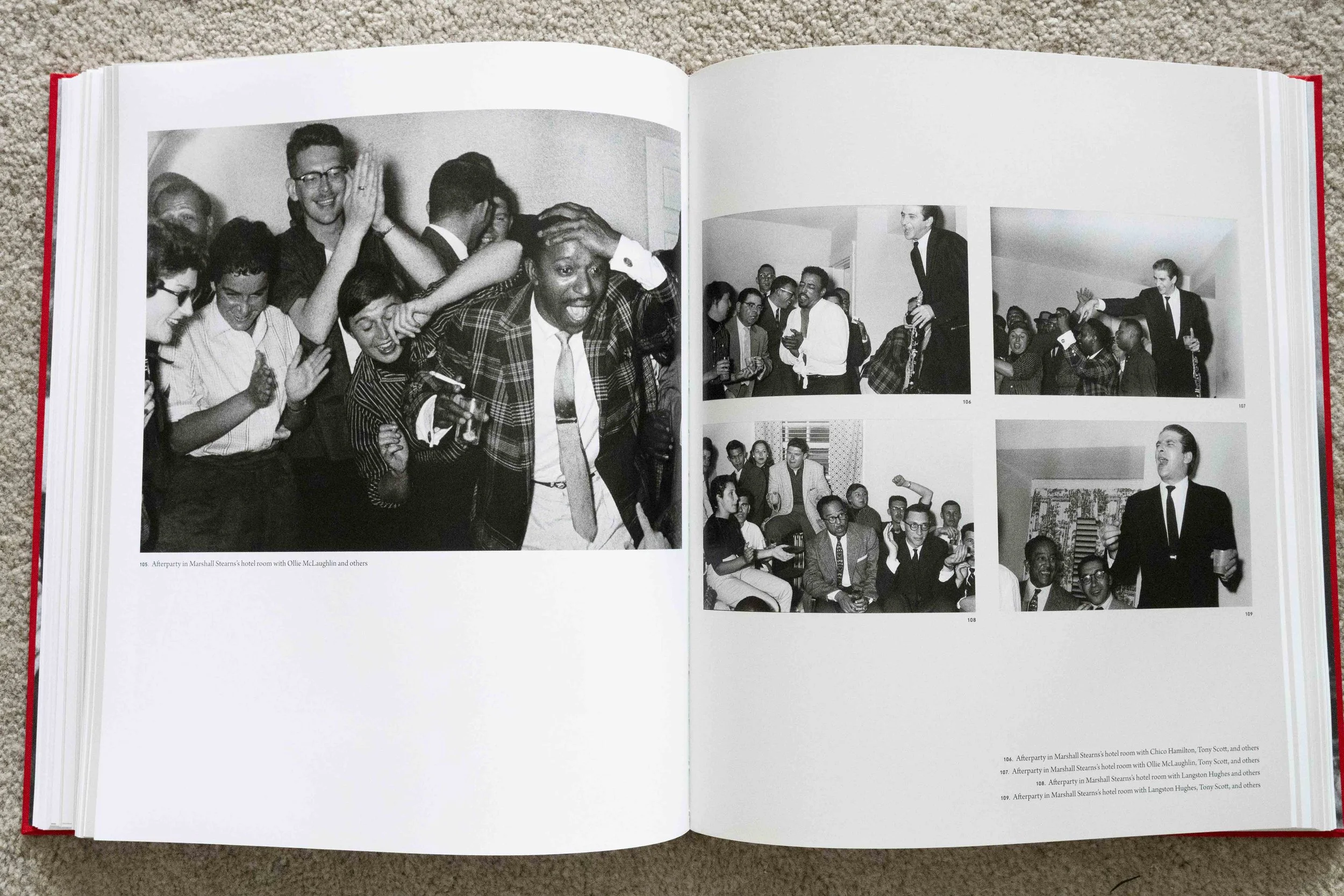
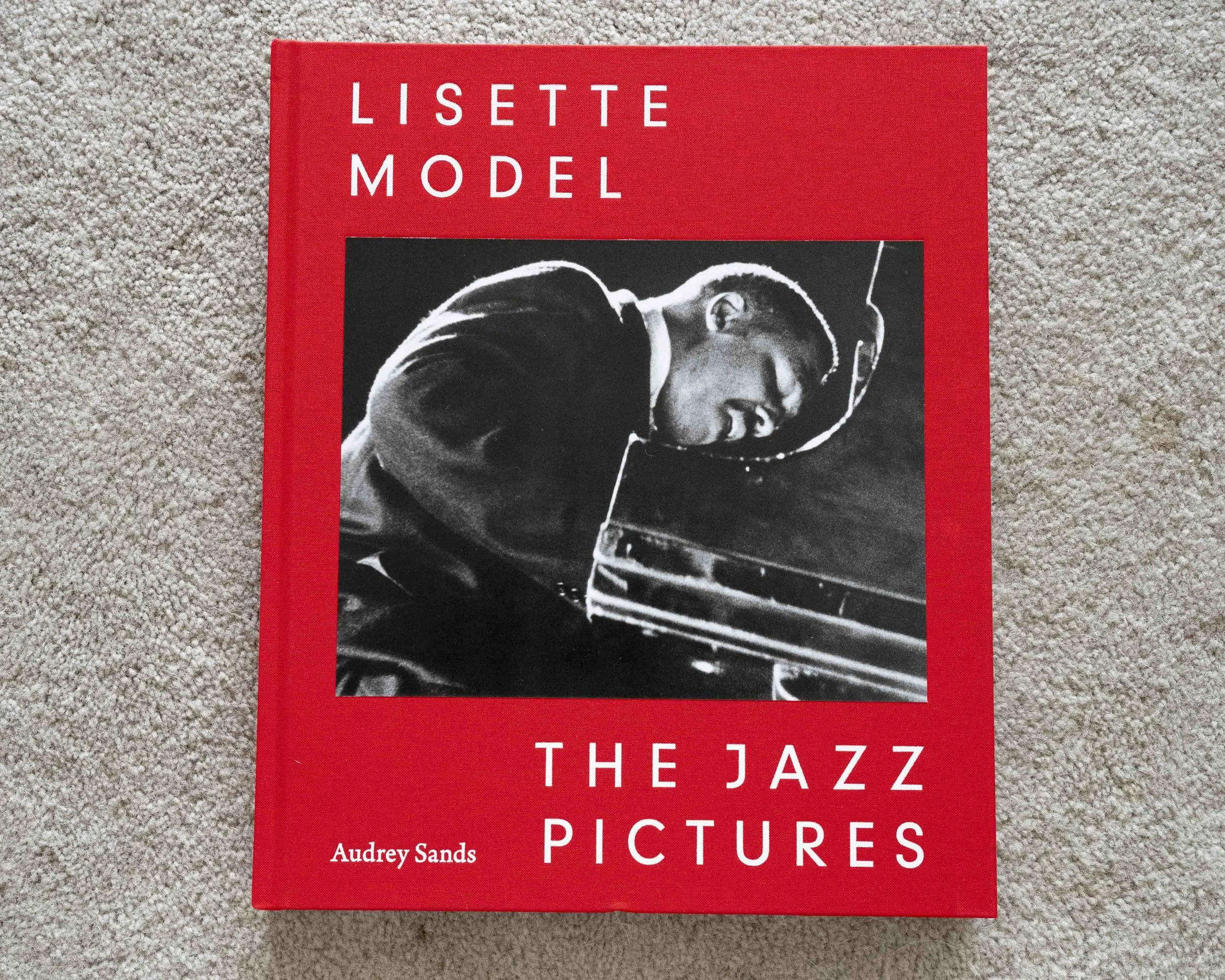
Last December I saw her post about the release of her new book “Lisette Model – The Jazz Pictures”.  The book looked incredible, so I set out to get a copy.  It took a little time because I wanted to get a signed copy, but I was able to make that happen and I received the book recently.  The book exceeded my expectations.

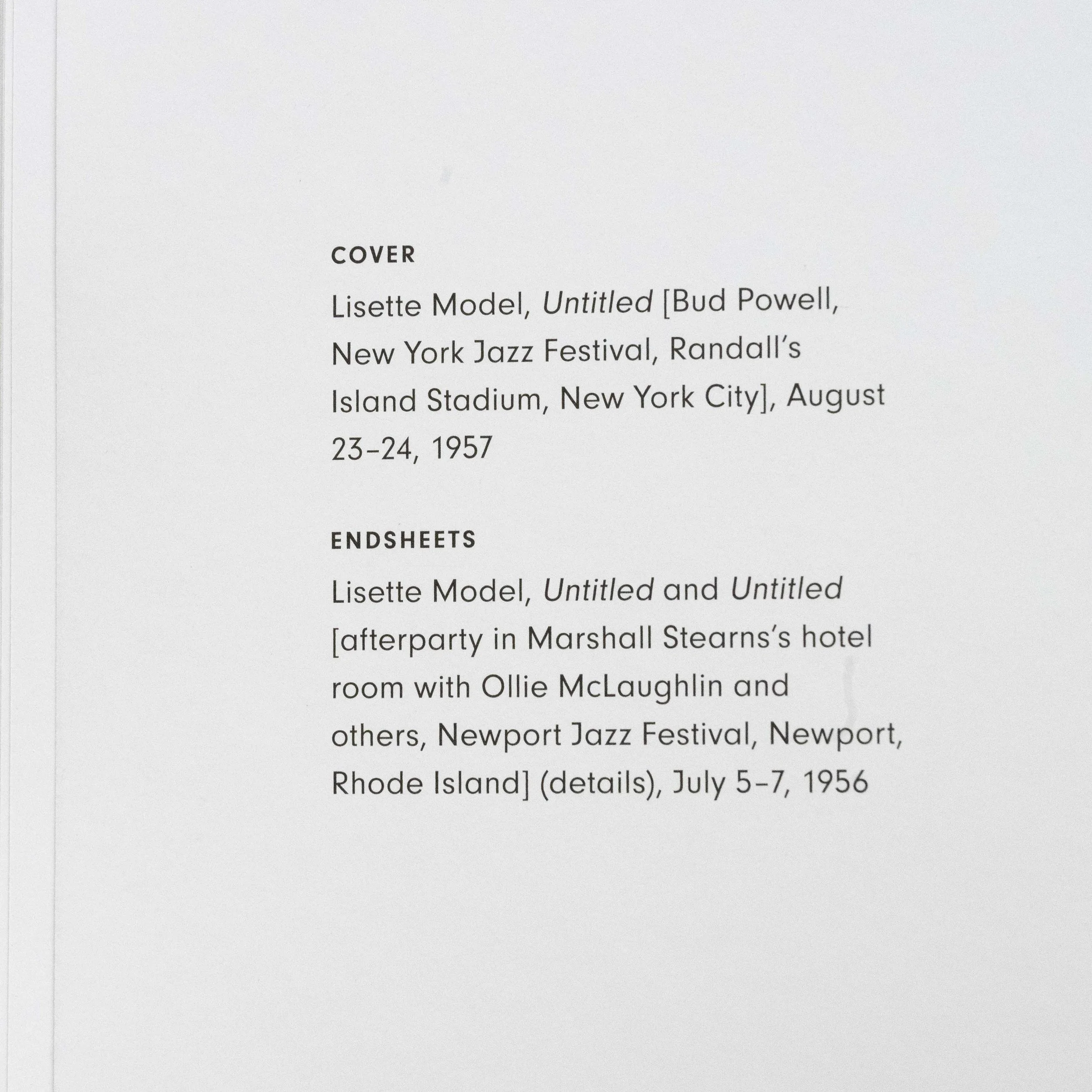
The book was published by Eakins Press in NYC and printed and bound at Graphius in Belgium.  The quality of the book is outstanding.  Beautiful printing, nice heavy papaer, and good binding.  The design is outstanding too.  I love the bright red of the cover and the layout of the pages.  Sands edited the book with Eakins Press’s Peter Kayafas.  The Design was by Julie Fry.  The book is 12” x 10” Cloth Bound Hardcover with 240 Pages, 316 Duo Tone images and 25 Color illustrations.

I know Audrey has collaborated on other book projects, but I am confident this is her first individual title.  Especially since she noted in the book that she worked on this project for ten years.  Audrey had to go to multiple locations to find images and documents for this book.  She did an outstanding job completing Model’s book without a roadmap left behind by Model.

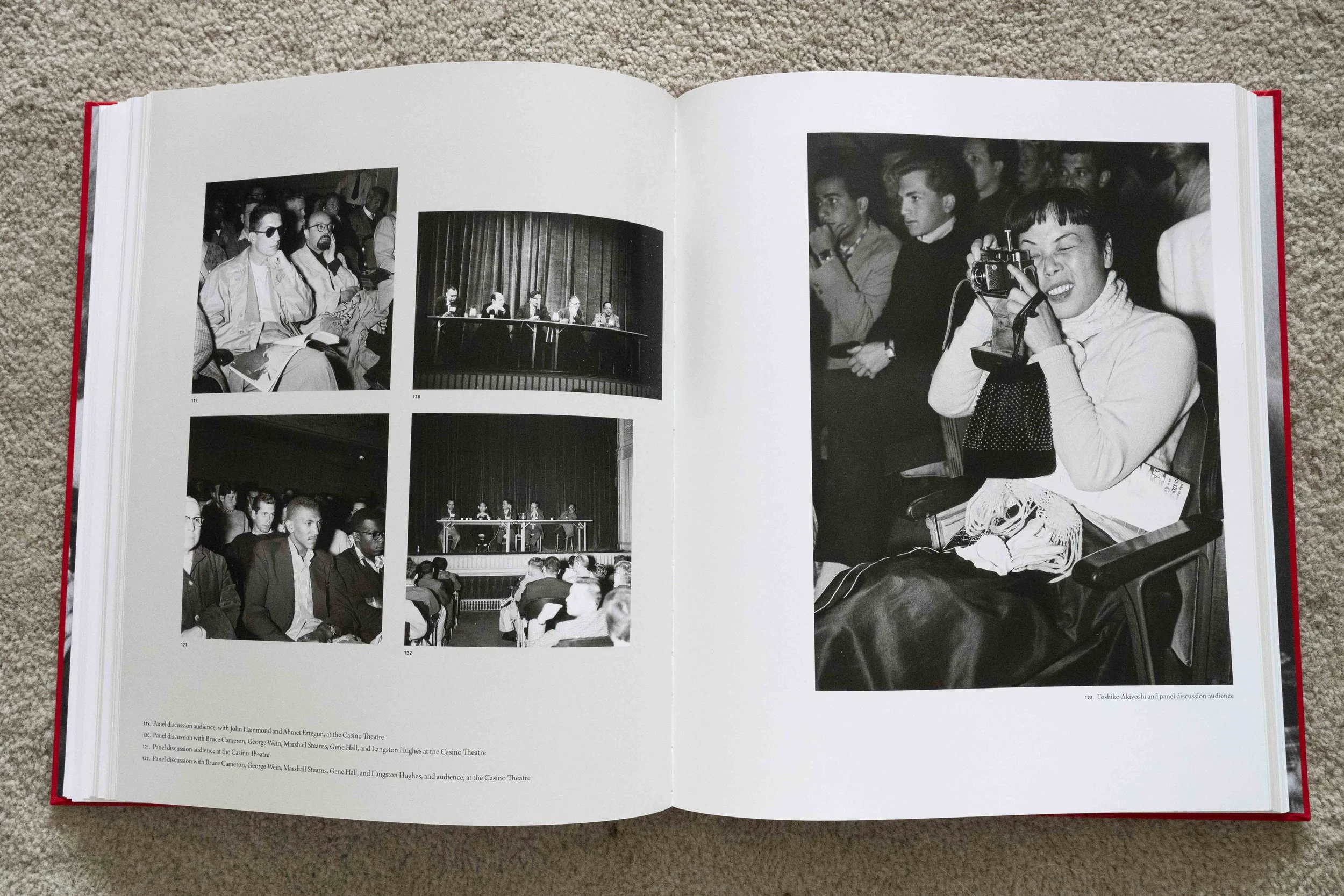
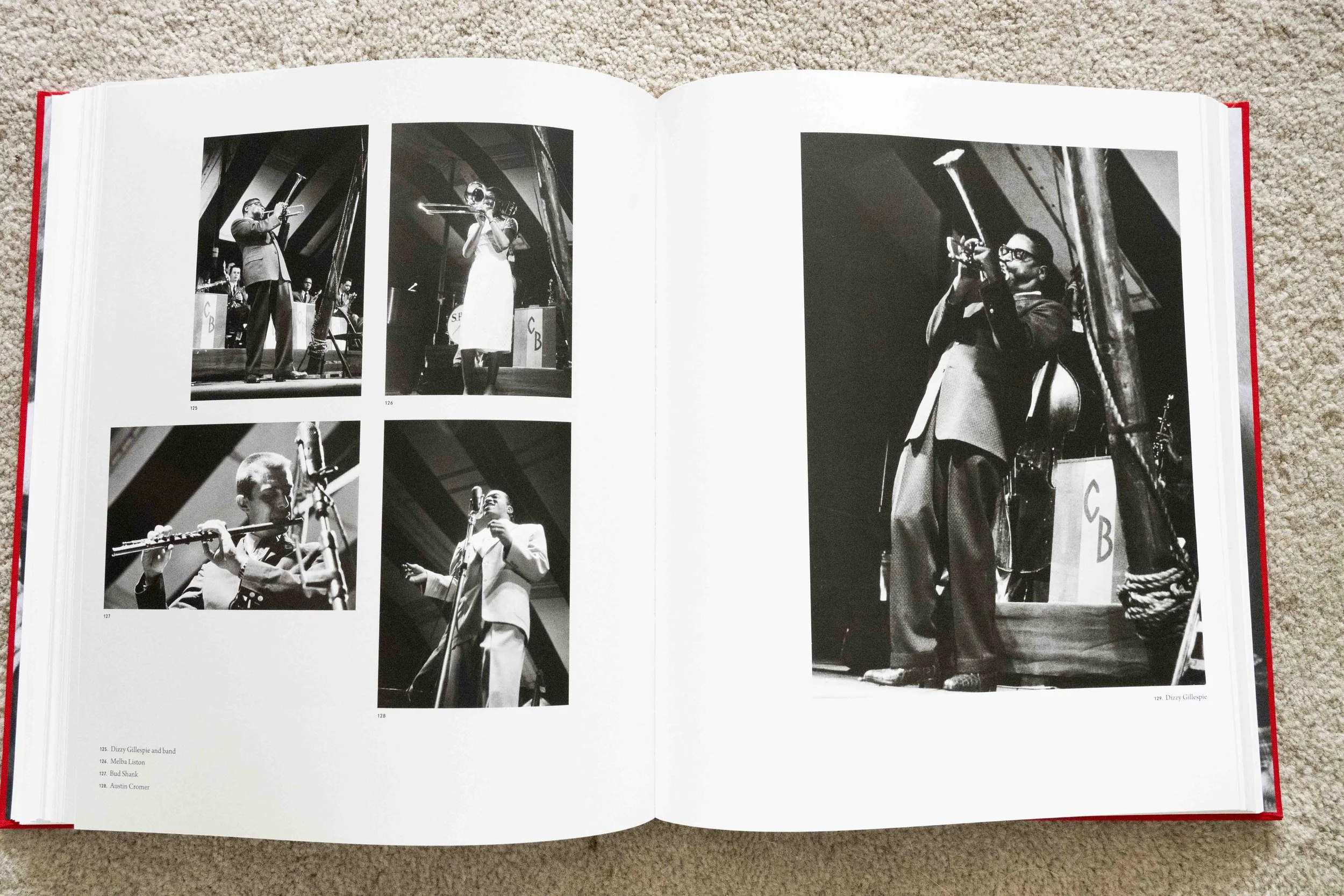
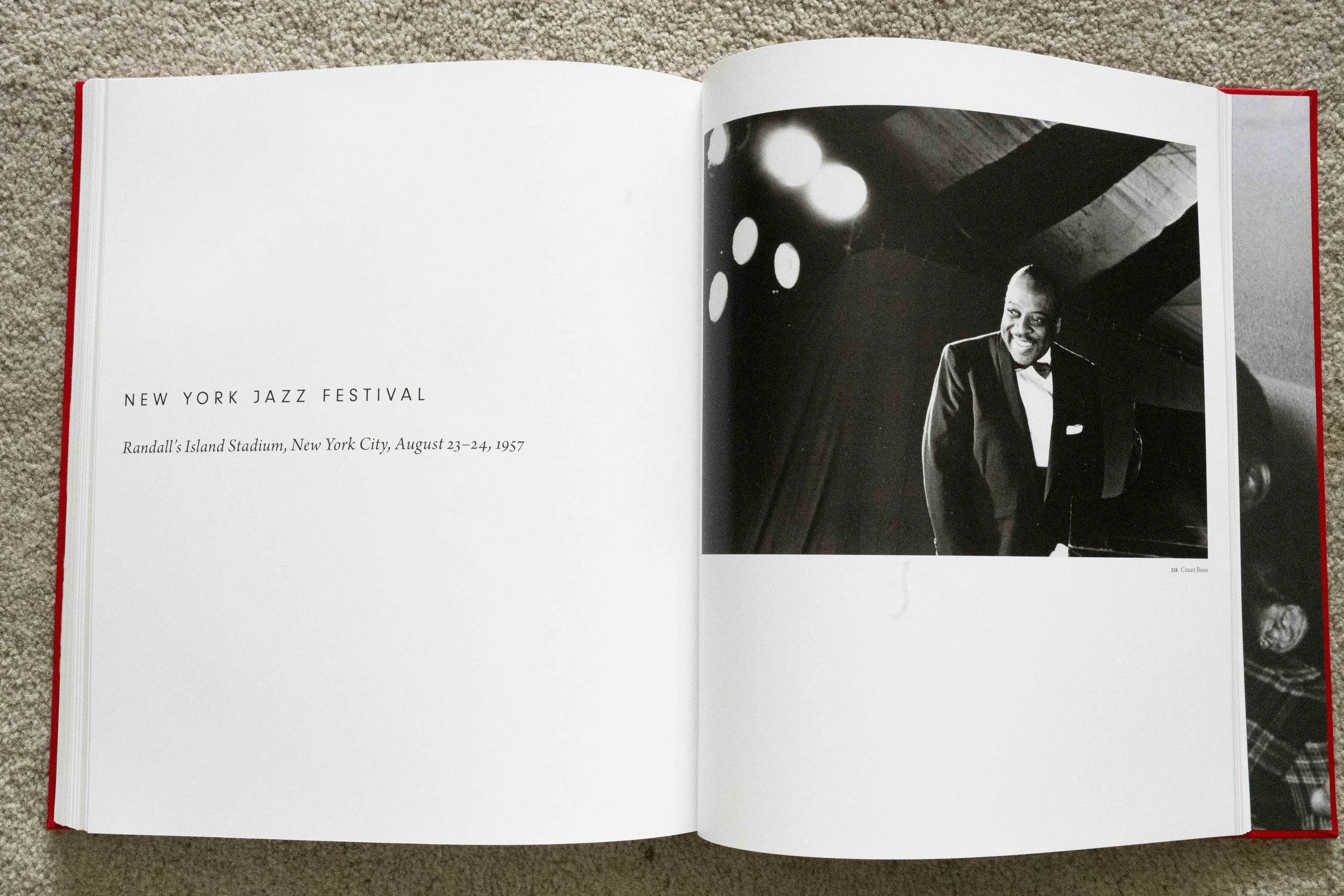
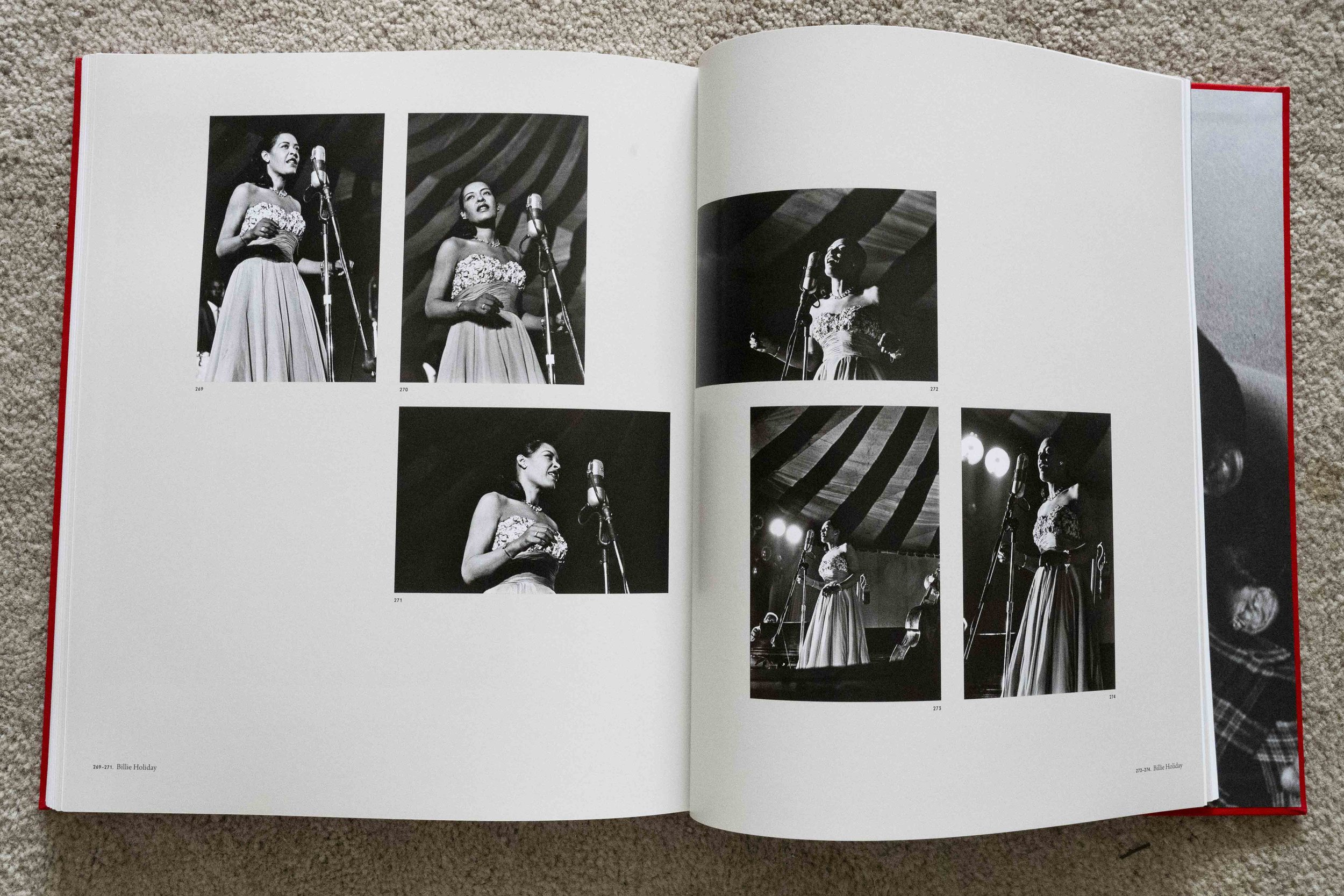
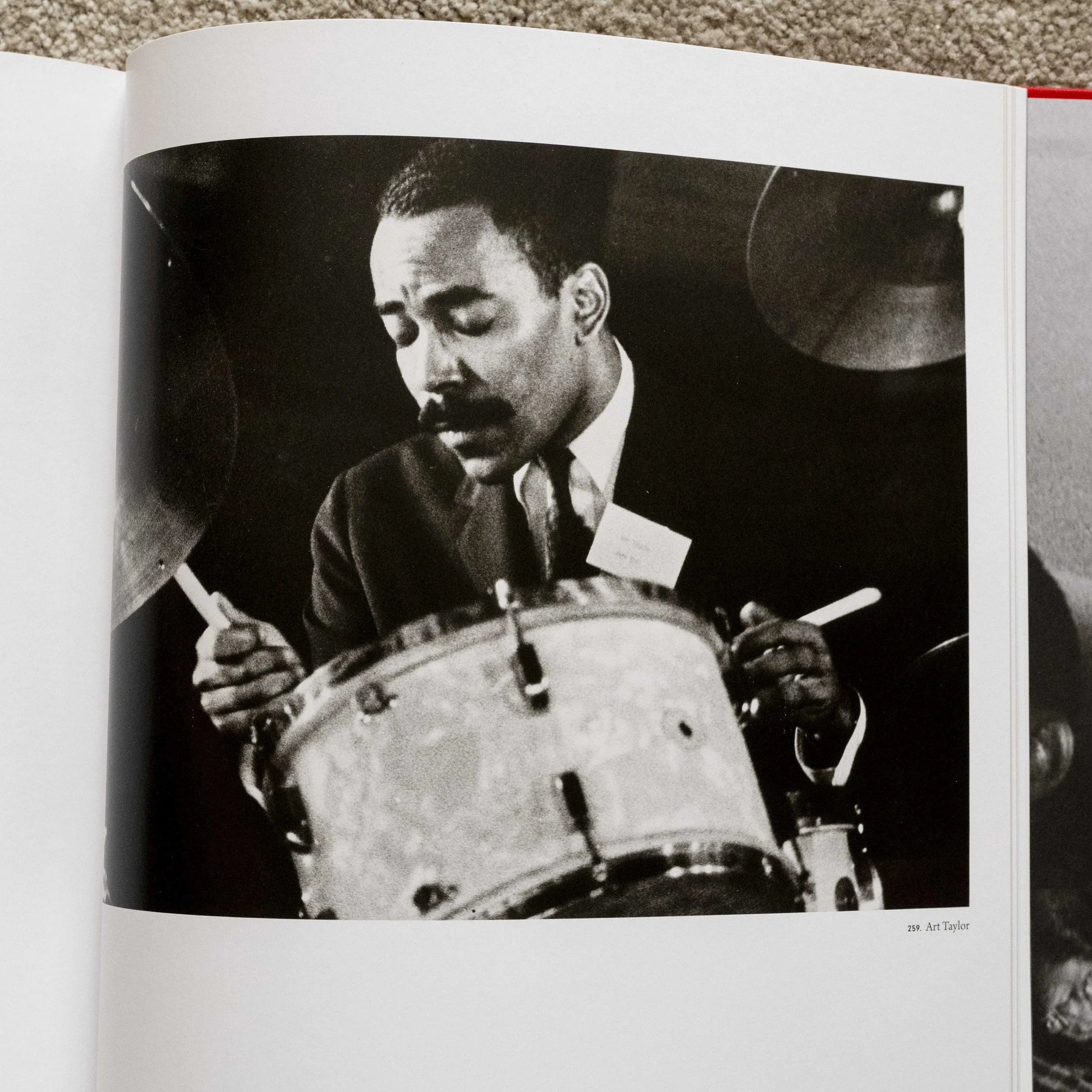
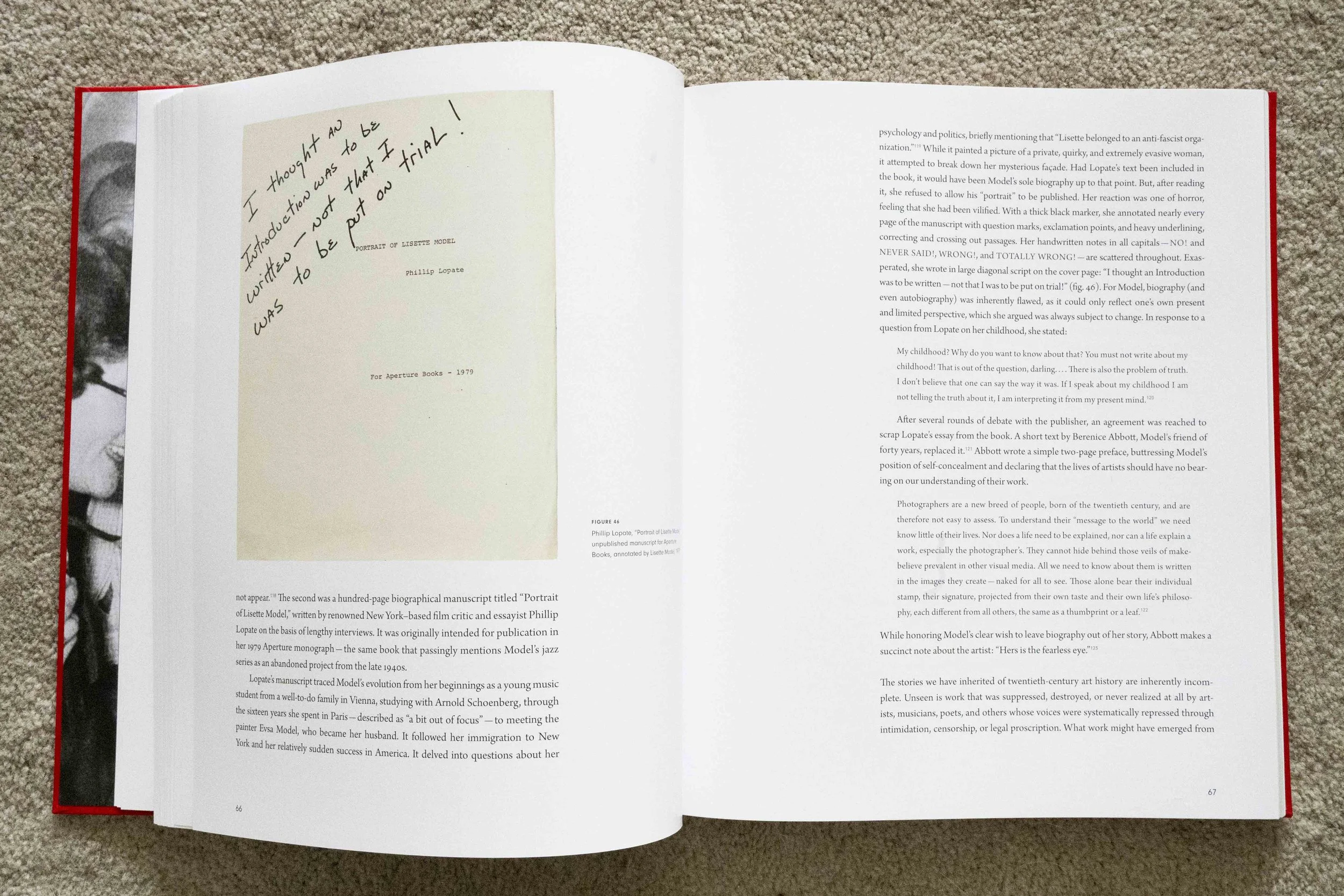
The thing I like most about this book is that it reveals Lisette Model’s process.  Whenever I can see proof sheets of working prints I can see how a photographer photographs.  Final prints show me their printing and editing skills.

I found it interesting that Model began the project photographing assignments for Harpers Bazar in the 1940’s and returned to the project later.  It that the subject interested her and mattered to her.  It is very interesting that Model wanted to publish this portfolio as a book but never did so because of the political climate of her era.  That fact highlights the shifts that have occurred since then.  That really stood out for me because I had a similar experience and I am waiting to publish certain portfolios.

I think Model’s images of Billie Holiday are some of the strongest in this portfolio.  Obviously, Holliday was dynamic so that helps a photographer.  But I thought Model’s photographs of Holliday in her coffin were good.  I was surprised that Audrey had documentation that Model was mostly unhappy with these photographs.  But finding out that Model was bothered by being rushed, with a 3 minute limit to photograph, and having to work in poor lighting conditions gave me more insight into Model.  She took pride in her craft she wanted her images to be near perfect as possible.  I noticed in the book that Holliday’s funeral was on July 20, 1959, in New York City.  This made me curious about one other factor that may have affected Model that day, the weather.  I did an online search and confirmed that it was hot and humid that day.  I have been in NYC when it is hot and humid, not the best conditions to photograph in especially since I assume she was dressed appropriately for a funeral service. The fact Model was allowed to photograph Holliday in her coffin at all shows that Model had earned trust with Holliday’s people in the time prior to her passing.

Lisette Model’s photographs are a great documentation of her period.  I like a lot of the images, but I have to acknowledge that like W. Eugene Smith’s Jazz Loft Project more.  Model is often photographed from a lower vantage point.  In one photograph in the book she stood on a chair to photograph and she looked short.  With that vantage point the instruments often blocked the faces of the perform not outstanding bers.  Smith’s photographs don’t have that.  Seeing a photographer’s different portfolios always gives us a better understanding of who they are.

Some of the Model’s photographs in the book are not outstanding but by including them in thee book it gives the reader a better understanding of her process.  I love looking at a photographer’s proof-sheets, it tells the truth about the photographer.  I know that the majority of images won’t be good, but the totality of images has so much information when viewed as a group.

This book gave me a better appreciation for the breadth of her work.

I love the photo of her by WeeGee .  It took me a minute to realize she had a net bag over her shoulder loaded with flash bulbs – More people newere to the medium need to understand what it took to make images in the preceding years.  They also need to understand what good prints look like, not just an Instagram swipe.
View fullsize webCA DSC_0674_ 02022026  .jpg
View fullsize webCA DSC_0675_ 02022026  .jpg
View fullsize webCA DSC_0676_ 02022026  .jpg
View fullsize webCA DSC_0677_ 02022026  .jpg
View fullsize webCA DSC_0680_ 02022026  .jpg
View fullsize webCA DSC_0683_ 02022026  .jpg
View fullsize webCA DSC_0684_ 02022026  .jpg
View fullsize webCA DSC_0681_ 02022026  .jpg
View fullsize webCA DSC_0679_ 02022026  _1.jpg

Eakins Press

I have two other books by Eakins Press in my library: Lee Friedlander – The People Pictures (2021) and Lee Friedlander’s Prayer Pilgrimage for Peach (2015).  Those books are also very good and each gives insight into Friedlander’s “process” because they show so many images from a relatively short time period.  The Eakins Press Foundation the press.  The Foundation is a not-for profit organization whose purpose is the advancement of literature and art through excellent presentation.  They met their mission standards with this book.
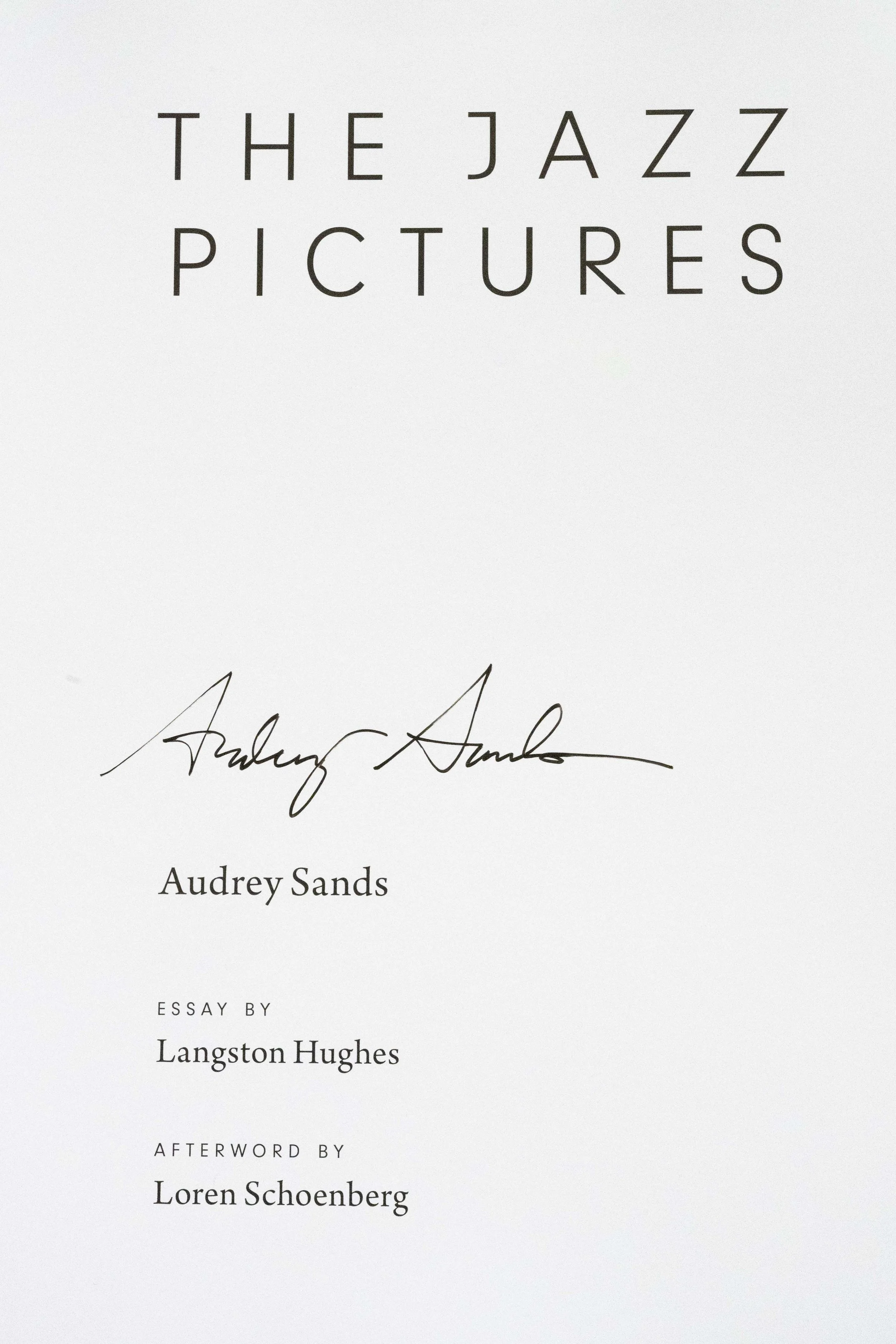
Audrey Sands

I did not know much about Audrey’s past before preparing to do the blog post.  What I learned is Audrey has degrees from Barnard and Oxford and received her PhD from Yale.  She also has received Fellowships at the National Gallery of Art and the Smithsonian.  So. her education is decent.

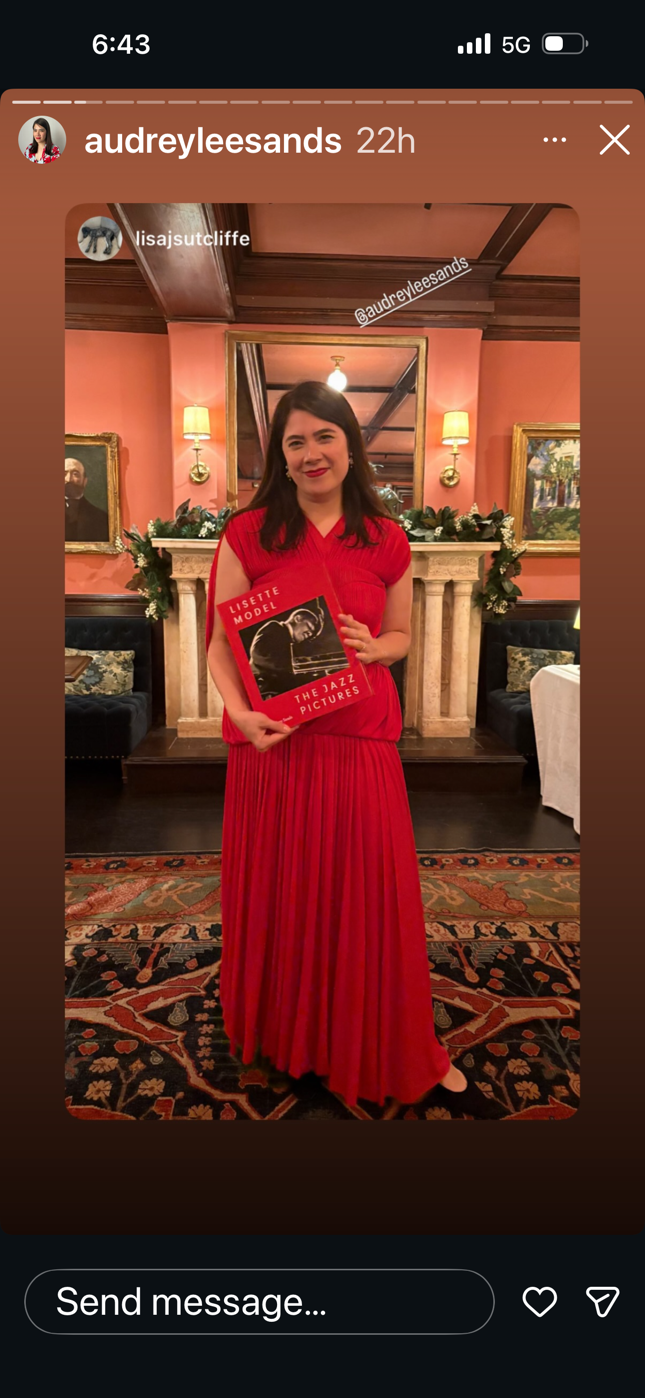
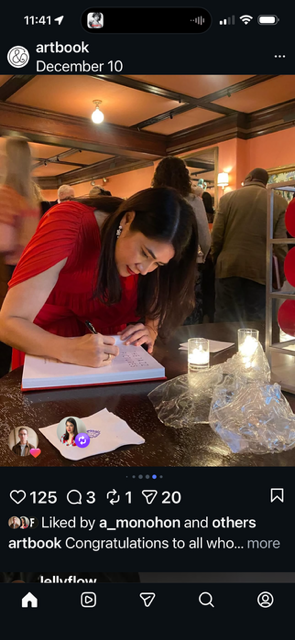
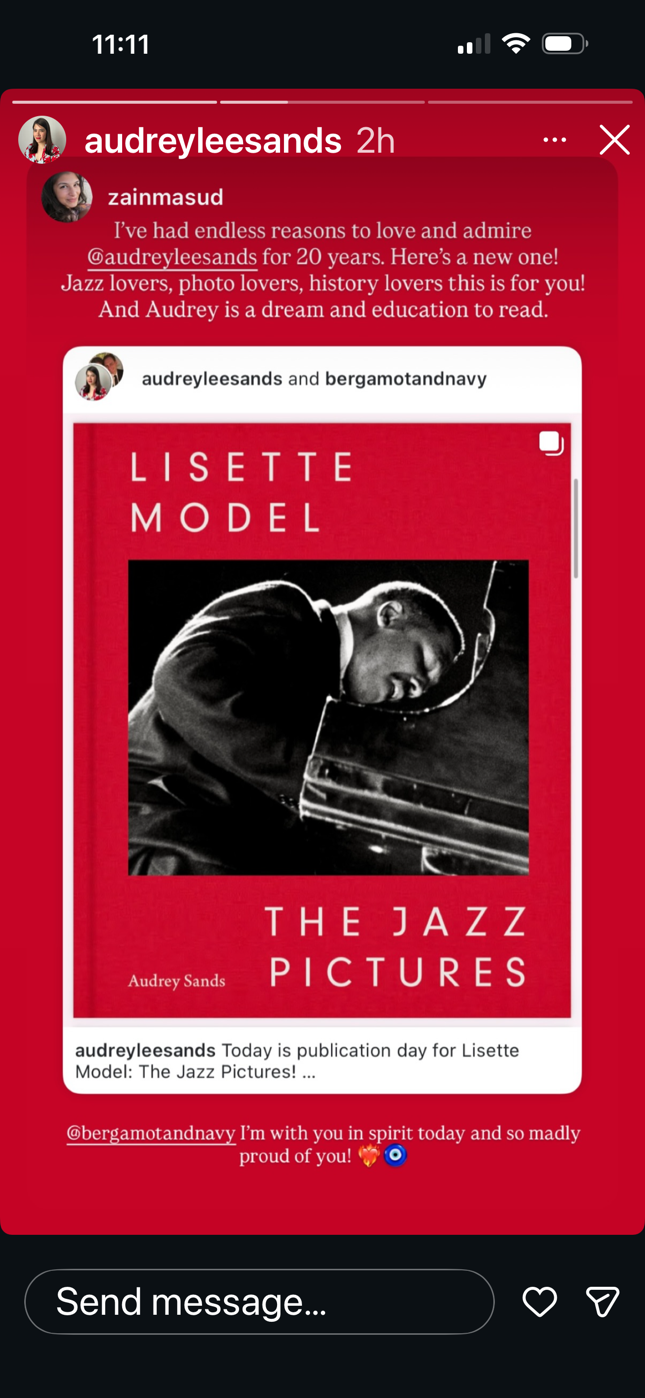
But I was impressed with some other things too.  When I saw her first Instagram post about the book release I immediately liked the design of the cover.  It was dynamic and Red is my favorite color.  Then when I saw posts of Audrey appearing for speaking events and books signings I immediately notice she wore a bright red dress similar to the same red as the book.  With her jet-black hair and eyebrows, I could see she was mirroring her book, which I thought was brilliant.  I think a lot of people know I was a Police Officer and Detective after graduating from ASU.  As I started reading this book I quickly realized Audrey has a detective’s mind.  She looks for answers, follows clues, and lets the process determine the final facts.  She also documents information in a clear and concise manner with her writing, which I absolutely love.  She is an investigator.
View fullsize IMG_3275.PNG
View fullsize IMG_3328 (1).PNG
View fullsize IMG_3547.PNG

The photography world often talks about “Emerging Photographers”, the less established photographers who are starting to consistently stand out.  I have never heard the “emerging” title applied to curators before, but Audrey Sands is a curator you should follow.  I am confident that adding this book to anyone’s library would be a great investment on a number of levels.

In Photography Theory, Photography Books, Photography Collector, Photography Tags “Lisette Model – The Jazz Pictures”, Lisette Model, Audrey Sands, Norton Family Assistant Curator of Photography, LIGHT symposium, Eakins Press Foundation, Graphius, Center for Creative Photography, Yale, Harvard, Oxford, National Gallery of Art, Smithsonian, Peter Kayafas, Billie Holiday, Julie Fry, Harpers Bazar
Comment
View fullsize web NB DSC_1420_ 01122024 _2.jpg
View fullsize web web NB DSC_1446_ 01122024  .jpg

A Long Arc - Photography and the American South

May 26, 2024

When I was studying photography at Arizona State, I became aware of the FSA photographers, the photographers who documented the Civil Rights Movement, Matthew Brady, and William Christenberry.  The images these photographers captured impacted how I see today.  I remember installing Christenberry’s photographs for an exhibition at the Northlight Gallery in Matthews Hall on campus, and being in awe of how beautiful the prints were. Christenberry’s work probably was the most obvious in documenting the American South, he captured scenes that only exist there.  At that time in my life when I was looking at the work of other photographers working in the South I was focused more on the specific subject matter and the craftsmanship of the images.  Over time, from revisiting my own images, I have gained a better understanding of how many layers of meaning an image can actually have.  Some images may have an obvious singular message, but many images have multiple layers of meaning and information once you learn how to look at photographs.  I also remember Bill Jay stressing to us in class that every viewer brings their own experiences to each image and what is important to one viewer may not be important to another. 

One of the people I follow on social media is Gregory Harris who is the is the High Museum of Art’s Donald and Marilyn Keough Family Curator of Photography. I have had the opportunity to meet Greg and I greatly respect his knowledge of Contemporary and Documentary Photography. At the end of last year, I saw him announce the release of the catalogue / book titled A long Arc Southern Photography which accompanied the exhibition at the High Museum.  I was immediately interested in the book, so I contacted the High Museum gift shop to arrange a purchase.  The book is the subject of this blog post, a post that is woefully overdue.

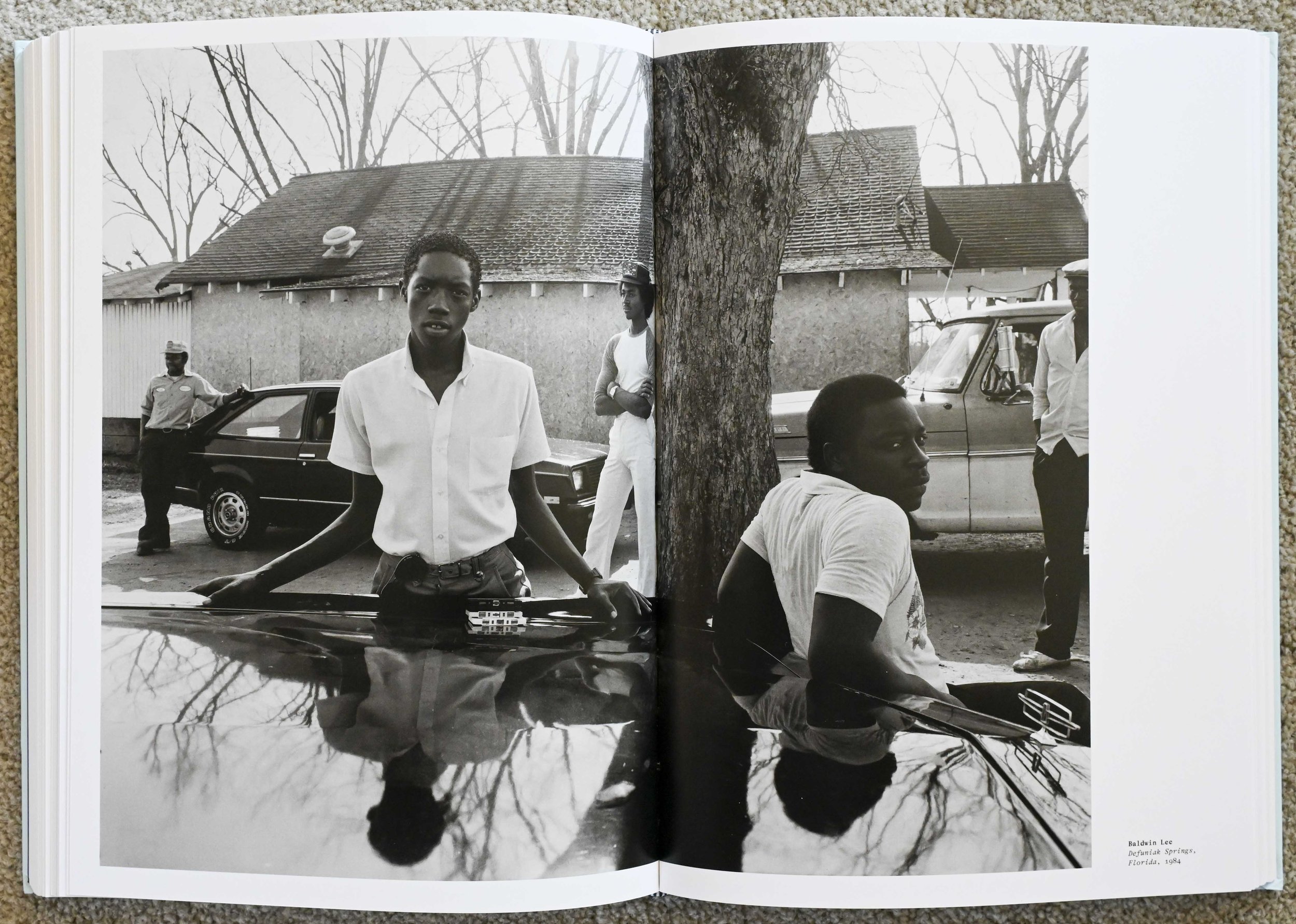
Weighing in at over 4 lbs. this 304 page Aperture book with over 275 photographs was published last November to accompany the exhibition which opened at the High Museum and is now currently on display at The Addison Gallery of Art at the Phillips Academy in Andover, Massachusetts until July 31st. From there it moves to the Virginia Museum of Fine Arts for an exhibition opening October 5th, 2024. The book is a beast, but it must be to properly cover the subject matter otherwise they would have omitted important photographers.  I love the layout of the book and the content; it is an amazing documentation of the history of photography in the American South.  The printing is good, and I like the fact the image descriptions and titles accompany the images.  The dimensions of the book are unique, but it works well, allowing creativity with the image placement on the pages.  The amount of information in this book, written and actual images, is incredible.  The only complaint I have about the book is the font size and text padding are smaller than I prefer, it isn’t an easy read, but I understand why that is because it would probably add another twenty-five plus pages to an already big book.

This book really brought in to focus how important the American South has been to the history of photography.  As I stated above, early on in my career I was aware of many of the notable photographers who had photographed in the South, but I hadn’t given any thought to how much the region was actually documented.  When I started going through this book I was immediately impressed by how many great photographers had photographed in the South.  I also was surprised to learn that some images I knew well, but had not considered the location, had actually been photographed in the South; the cover image of Robert Frank’s The Americans book is an example of one of those images.

A Long Arc - Photography and the American South - Page Examples:

View fullsize web CA DSC_9211_ 05252024 .jpg
View fullsize web NB DSC_1423_ 01122024 .jpg
View fullsize web CA DSC_9225_ 05252024 .jpg
View fullsize web CA DSC_9212_ 05252024 .jpg
View fullsize web NB DSC_1425_ 01122024 .jpg
View fullsize web NB DSC_1428_ 01122024 .jpg
View fullsize web CA DSC_9215_ 05252024 .jpg
View fullsize web CA DSC_9214_ 05252024 .jpg
View fullsize web NB DSC_1439_ 01122024 .jpg
View fullsize web CA DSC_9213_ 05252024 .jpg
View fullsize web NB DSC_1429_ 01122024 .jpg
View fullsize web NB DSC_1430_ 01122024 .jpg
View fullsize web NB DSC_1432_ 01122024 .jpg
View fullsize web CA DSC_9217_ 05252024 .jpg
View fullsize web CA DSC_9223_ 05252024 .jpg
View fullsize web CA DSC_9219_ 05252024 .jpg
View fullsize web CA DSC_9224_ 05252024 .jpg
View fullsize web CA DSC_9218_ 05252024 .jpg
View fullsize web CA DSC_9226_ 05252024 .jpg
View fullsize web CA DSC_9220_ 05252024 .jpg

 Much of America is changing today because of ideological influences, migration, and a host of other factors that are too complex to get in to here.  Many of our major cities have quality of life issues with things like the high cost of living, overcrowding, and criminal justice failures.  Having visited Atlanta a couple years ago I felt the region seemed less affected by the problems in other parts of the country.  I am not naïve to problems of the South’s past, but I didn’t feel the same racial tension in Atlanta that I have felt recently in Los Angeles (which has increased dramatically from when I was younger).  The small portion of the South I have seen seems to be more like the America of the 20th Century than a lot of other parts of the country are today and I appreciate that.  It is important to retain our American identity as a society while still appreciating and respecting the diversity within the whole.  I think the residents in the South may be doing a better job of this than other regions of our country.  So, with all this said, I think this book also has value documenting the community of the South which is separate from the history of photography element of the book.  Another thing to appreciate is how many images in the book also document important historic and transformative moments in American history.

I have reviewed several books here on my blog and with each the goal is to give a fair evaluation of the book along with my personal taste opinions.  One thing I always try to identify is who the book is best suited for, since photography interests and tastes are so varied and photography books can be expensive.   This is one of the few recent books that I believe would be a good addition to anyone’s photography library.  This book is as complete a document as you can author for the subject.  The reader will definitely learn something new about the medium and probably rediscover some images they had not thought about in a while.  The book is well worth the price, Amazon now has it for $47.  It is important for photographers to understand the history of the medium to be good at their craft.  I know most of us think New York is the center of the photographic universe but the photographs from the American South are some of the most important images ever made. 


The book’s official description is as follows:

Collects over 175 years of key moments in the visual history of the Southern United States, with over two hundred and fifty photographs taken from 1845 to present. The South is perhaps the most mythologized region in the United States and also one of the most depicted. Since the dawn of photography in the nineteenth century, photographers have articulated the distinct and evolving character of the South’s people, landscape, and culture and reckoned with its fraught history. Indeed, many of the urgent questions we face today about what defines the American experience—from racism, poverty, and the legacy of slavery to environmental disaster, immigration, and the changes wrought by a modern, global economy—appear as key themes in the photography of the South. The visual history of the South is inextricably intertwined with the history of photography and also the history of America, and is therefore an apt lens through which to examine American identity. A Long Arc: Photography and the American South accompanies a major exhibition at the High Museum of Art in Atlanta, with more than one hundred photographers represented, including Walker Evans, Robert Frank, Gordon Parks, William Eggleston, Sally Mann, Carrie Mae Weems, Dawoud Bey, Alec Soth, and An-My Lê. Insightful texts by Imani Perry, Sarah Kennel, Makeda Best, and Rahim Fortune, among others, illuminate this broad survey of photographs of the Southern United States as an essential American story. Copublished by Aperture and High Museum of Art, Atlanta

Details         

Format: Hardback

Number of pages: 304

Number of images: 275

Publication date: 2023-11-21

Measurements: 8.07 x 11.42 inches

ISBN: 9781597115513

Contributors

Imani Perry is the Hughes-Rogers Professor of African American Studies at Princeton University and a faculty associate with the programs in law and public affairs, gender and sexuality studies, and jazz studies.

Sarah Kennel is the Aaron Siskind Curator of Photography and Director of the Raysor Center for Works on Paper at Virginia Museum of Fine Arts, Richmond.

Gregory J. Harris is the Donald and Marilyn Keough Family Curator of Photography at the High Museum of Art.

Makeda Best is the Richard L. Menschel Curator of Photography at the Harvard Art Museums.

LeRonn P. Brooks is associate curator for modern and contemporary collections at the Getty Research Institute in Los Angeles.

Rahim Fortune is a photographer living and working between Austin and Brooklyn.

Grace Elizabeth Hale is commonwealth professor of American studies and history at the University of Virginia.

Maria L. Kelly is assistant curator of photography at the High Museum of Art.

Scott L. Matthews is assistant professor of history at Florida State College at Jacksonville.

Brian Piper is Andrew W. Mellon Foundation Assistant Curator of Photographs at the New Orleans Museum of Art.

Press Quotes:

“The magnificence of a retrospective like this is not just the accounting offered by its historical sweep, but the way it conveys the immense complexity of this region, to inspire a renewed attention to the cruel radiance of what is. Suffering does not always lead to compassion and change, but photographs like these remind us that standing in witness to suffering surely should.”—Margaret Renkl, The New York Times

“…these photographs demonstrate how essential the South has been not only to American history and identity, but to American photography—from Mathew Brady’s battlefield images of the Civil War (1861–65) to the intimate interiors of Carrie Mae Weems.”—Andrew Durbin, Frieze magazine

Additional Information about the Exhibition:

You Tube Video of the Installation at the High Museum (11 mins)

In Photography Books, Photography Collector, Photography Exhibitions, Museums, Photography, Civil Unrest Tags A Long Arc - Photography and the American South, Brian Piper, New Orleans Museum of Art, Scott L. Matthews, Maria L. Kelly, High Museum, Grace Elizabeth Hale, University of Virginia, Rahim Fortone, Gregory Harris, LeRonn P. Brooks, Getty Research Institute, Makeda Best, Harvard, Sarah Kennel, Virginia Museum of Fine Arts, Imani Perry, Princeton, Walker Evans, Gordon Parks, William Christenberry, William Eggleston, Dawoud Bey, Baldwin Lee, Aperture, Matthew Brady, Robert Frank, Garry Winogrand, FSA, Margaret Renkl, The New York Times, Andrew Durbin, The Addison Gallery, Phillips Academy, Arizona State University, Bill Jay, Photography, Photography Book
Comment
Blog Index

Instagram

https://www.instagram.com/williamkarlvalentine/


Twitter

@Valentinephotog


Powered by Squarespace